You likely see security cameras every day. You see them at the grocery store. You see them at your office. You might even have one on your front porch. For years, these cameras did one simple thing. They recorded a video. If something went wrong, you looked at the footage later.
This is a reactive approach to security. It relies on someone watching a screen or checking a hard drive after a crime happens.
Artificial intelligence surveillance changes this old model and transforms it from reactive to proactive. It understands what the camera sees in real time and identifies patterns. It alerts you to trouble before it escalates.
In this guide, you will learn how AI in security and surveillance works and how you can upgrade your current setup without starting from scratch.
Understanding the Basics of AI for Video Surveillance
AI surveillance is not just a digital recording. It is a system that uses computer vision to see and interpret visual information like a human does.
When you use AI video surveillance, the software looks for specific objects or actions. It can tell the difference between a person and a stray cat. This capability is the foundation of all AI-powered surveillance systems.
The Role of CCTV Analytics
Traditional CCTV systems are passive. AI makes them active by setting rules that the computer follows. If a person enters a restricted area after 10 PM or a worker forgets to put on a helmet, the system flags it.
Most businesses have more cameras than security guards. It is impossible for one person to watch fifty screens at once. AI-powered security cameras take over this burden by monitoring every pixel of every camera simultaneously.
How AI Integration in Surveillance Upgrades Your Security
Many AI-powered surveillance solutions work with your existing hardware. This is called AI integration in surveillance. This means you don’t need to buy new equipment to use AI.
You can add an AI layer between your cameras and your monitors that processes the video feeds. This saves money, as you keep your existing cameras and add modern capabilities.
Upgrading Legacy Systems
Many organizations have invested thousands of dollars in their current security infrastructure. There’s no need to change it. AI integration in security cameras allows you to bridge the gap.
1: Connecting to the Cloud
You can send your video feeds to a cloud-based AI service. The cloud processes the data and sends alerts to your phone. This requires minimal on-site hardware.
2: Using Edge Computing
Some new cameras have AI built directly into the device. This is called edge computing. The camera processes the video right where it happens. This reduces the amount of data sent over your network.
3: Adding an AI Bridge
You can install a small device on your local network. This device connects to your old DVR or NVR. It adds AI features to every camera on your network.
Core Features of AI in Surveillance Systems
When you look for an AI-powered security solution, you will see several technical terms. These features define how the system helps you.
Behavior Analysis
Behavior analysis is a powerful tool that goes beyond identifying who is in the frame and looks at what they’re doing. For example, if a person stands in front of an ATM for ten minutes without using it, the system might flag this as loitering. If a person falls in a hospital hallway, the system can alert a nurse immediately.
Anomaly Detection
Anomaly detection is about finding things that do not belong. In an office building, people move through the lobby during the day. If the system detects a person crawling through a window at midnight, that is an anomaly. The AI learns what is normal for your specific site and then alerts you only when something strange happens.
Predictive Analytics
This is one of the most advanced parts of AI surveillance. Predictive analytics uses historical data to predict what might happen next. If a certain area of a parking lot sees frequent break-ins at a specific time, the system will tell you. You can then move a security guard to that area.
Traditional Surveillance vs. AI Surveillance
| Feature |
Traditional Surveillance |
AI Surveillance |
| Monitoring |
Requires human eyes on screens |
Automated 24/7 monitoring |
| Response |
Reactive (after the event) |
Proactive (during or before) |
| False Alarms |
High (triggered by wind or shadows) |
Low (filters out non-threats) |
| Search Speed |
Manual search takes hours |
Instant search by keyword or trait |
| Scalability |
Difficult to manage many cameras |
Easily handles hundreds of feeds |
| Cost |
High labor costs for monitoring |
Lower long-term costs via automation |
The Benefits of AI in Security
Why should you consider AI for your security needs? The benefits are clear and measurable.
Accuracy and Reduced False Alarms
One of the biggest problems with old motion-sensing cameras is false alarms. A blowing tree branch or a spider web can trigger an alert. When you get too many false alarms, you stop trusting them altogether, like the boy who cried wolf.
AI in security and surveillance solves this. The software understands context and only alerts you in case of real problems.
Faster Search and Retrieval
Consider that you need to find a video of a red truck that entered your facility last Tuesday. With traditional systems, you would spend hours fast-forwarding through footage. By using AI for video surveillance, you can search for “red truck” in a search bar and get every instance of a red truck in seconds. This saves you an incredible amount of time during investigations.
Improved Situational Awareness
AI gives you a bird’s-eye view of your security. It can track a person as they move from one camera to another and piece together clips from different sources. This helps you understand exactly what happened during an incident.
Real-World Applications of Artificial Intelligence Surveillance
The use cases of AI-powered security solutions are present across all industries. From a high-tech factory to a bustling retail store, AI can be leveraged everywhere.
Schools & Universities
For schools, safety is a top priority. AI surveillance can detect things like concealed weapons, unauthorized individuals, and entry into restricted zones to ensure security. Not just that, it can also detect things like:
- Students quarrelling
- A student falling or facing injury
- Unattended classrooms
This creates a safer environment for learning.
Retail
In retail, AI can be leveraged to prevent shoplifting by detecting suspicious movements, like someone hiding an item in their coat. It can also track:
- Footfall
- Empty shelves
- Fallen items
- Popular aisles
This data helps you manage your staff and your inventory.
Manufacturing
The scenario flips in a factory where safety and productivity are more important than theft. Here, AI in surveillance systems can detect things like:
- Safety protocol violations
- Unattended machinery
- Debris/smoke/fire/oil spills
- Idle workers
- Potential conflict
AI can also detect if a person enters a dangerous zone near moving machinery.
Construction
Construction sites are known to be high-risk areas where a minor issue can lead to injuries. This is where AI can detect:
- Safety protocol violations
- Height-work violations
- Vehicle tracking
- Debris
AI enables you to take proactive measures by notifying you that a particular worker isn’t wearing a safety harness before things go wrong.
Privacy and Ethics in AI Surveillance
When you talk about AI surveillance, you must talk about privacy. Many people feel uneasy about being watched by an intelligent machine. It is important for you to use these tools responsibly.
Transparency
You should be open about your use of AI. Put up signs that tell people they are being monitored. Explain why you are using the technology. Most people feel better if they know the goal is safety rather than tracking their every move.
Data Security
The data your cameras collect is sensitive and must be protected. Ensure your AI-powered surveillance solutions use strong encryption. Limit who has access to the footage and delete data when you no longer need it.
Avoiding Bias
AI models are trained on data. If that data is biased, the AI might be biased too. For example, some facial recognition systems have struggled to identify people with certain skin tones. Choose providers who prioritize fairness and test their systems for bias. You want a system that protects everyone equally.
How to Choose the Right AI for Video Surveillance
There are many options for AI in security and surveillance available in the market. All of them promise the best, creating confusion and making decisions feel overwhelming. We’ve listed down the steps that can simplify things and help you make a good choice.
1: Define Your Goals
- Do you want to stop theft?
- Do you want to monitor employee safety?
- Do you want to speed up your investigations?
- Your goal will determine which features you need.
2: Check Your Infrastructure
- Can your internet handle uploading video to the cloud?
- Do you want to keep your current cameras?
- Look for systems that offer AI integration in surveillance.
3: Consider Ease of Use
- You should not need a computer science degree to use your security system.
- Look for a clean interface.
- Make sure the mobile app is easy to navigate.
4: Evaluate the Total Cost
- Look past the initial price tag.
- Consider monthly subscription fees.
- Think about how much money you will save by reducing false alarms and labor hours.
The Future of AI in Surveillance Systems
AI is just in the incubation phase. It’ll only get better down the line. We’re moving to a world where CCTVs don’t just record but actually understand what’s happening in the footage. Here’s what we can expect AI to do in the future.
Autonomous Response
In the future, your AI surveillance system might be able to take action on its own. If it detects a fire, it could call the fire department and unlock the emergency exits. If it sees a trespasser, it could play a pre-recorded warning or turn on bright floodlights. This reduces the time it takes to respond to a threat.
Improved Integration
AI will connect more deeply with other systems. Your cameras will be connected to your access control systems, your lighting, and your alarms. Everything will work together to fortify security around your property.
Enhanced Privacy Tools
New technology will help protect privacy while maintaining security. For example, AI can automatically blur the faces of people who are not involved in an incident. This allows you to monitor an area without compromising the anonymity of innocent bystanders.
Common Myths About Artificial Intelligence Surveillance
There is a lot of misinformation out there when it comes to AI and computer vision. Let’s clear up a few common myths.
Myth 1: AI Will Replace Human Guards
AI doesn’t replace humans. It makes them better at their jobs. AI handles the boring task of watching hours of empty hallways. This frees up your security team to respond to actual incidents and interact with people.
Myth 2: AI is Only for Large Enterprises
AI-powered surveillance solutions are now affordable for small businesses and even homeowners, as the cost of computing power has dropped. You can get high-quality AI features for a fraction of what they cost five years ago.
Myth 3: AI Means 100% Accuracy
While AI can monitor your facilities with 100% alertness 24/7, which is far more consistent than a human watching a screen for hours, it can still make mistakes. You should always have a human in the loop to make the final decisions on important alerts.
Implementing AI for Video Surveillance in Your Business
If you’re planning to implement AI in your CCTVs, begin with a pilot program. Pick one area of your facility and integrate AI into the CCTVs in that particular area.
Monitor the results for a month and check how many accurate alerts you get. See how much faster you can find footage. Once you see the value, you can scale the system to the rest of your property.
You should also train your staff. They need to know how to respond to the new types of alerts they will receive.
How AI in Surveillance Systems Works
For the geeks out there, here’s an overview of what goes on behind the system. AI for video surveillance relies on neural networks, which are computer systems modeled after the human brain.
The software is trained on millions of images. Developers show the computer thousands of pictures of guns, for example. Eventually, the computer learns to recognize a gun in many different positions and lighting conditions. This process is called deep learning.
In the real world, when your camera sees an object, it compares it to the patterns it learned during training. It assigns a probability score. If the score is high enough, the system triggers an alert in a fraction of a second.
ROI: Is Artificial Intelligence Surveillance Worth the Investment?
You have to look at the return on investment. This is a major decision-making factor for businesses looking to incorporate AI. Here are the benefits you can expect:
Reduced Theft: AI can catch shoplifters or burglars in the act.
Lower Labor Costs: You may need fewer people to monitor your screens.
Operational Efficiency: Use the data to optimize your store layout or staffing levels.
Safety Compliance: Avoid expensive fines by ensuring safety protocols are followed.
Peace of Mind: Knowing your property is being watched by a tireless system is valuable.
For most businesses, the system pays for itself within the first year or two. The reduction in false alarms alone saves a significant amount of money and stress.
Final Thoughts for Your Security Journey
Artificial intelligence surveillance offers you a level of protection that was impossible just a decade ago. The best part is that you don’t have to change your infrastructure.
NavAI CCTV analytics integrates with your existing CCTV hardware. It monitors the live feed, detects incidents, and alerts the concerned person on WhatsApp.
Eg: “Worker in Zone D41 isn’t wearing a helmet.”
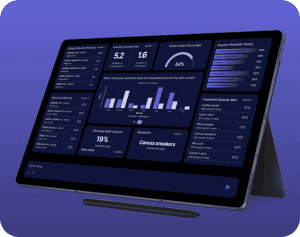
And that’s just the tip of it. NavAI provides you with a conversational BI interface where you can talk to your CCTV data and get answers.
Eg: “What was the average daily idle time in January?”
And NavAI provides you with the answer in seconds.
You deserve a system that does more than just record the past. You deserve a system that protects your future. Embrace the change and make your environment a safer place for everyone.